


Text Box: Page #
Text Box: Volume 9, issue    1
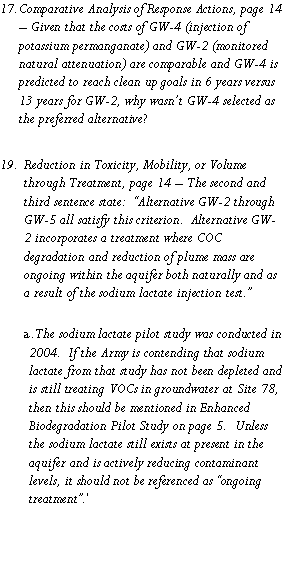
Text Box: Comparative Analysis of Response Actions, page 14 – Given that the costs of GW-4 (injection of potassium permanganate) and GW-2 (monitored natural attenuation) are comparable and GW-4 is predicted to reach clean up goals in 6 years versus 13 years for GW-2, why wasn’t GW-4 selected as the preferred alternative?


Reduction in Toxicity, Mobility, or Volume through Treatment, page 14 – The second and third sentence state:  “Alternative GW-2 through GW-5 all satisfy this criterion.  Alternative GW-2 incorporates a treatment where COC degradation and reduction of plume mass are ongoing within the aquifer both naturally and as a result of the sodium lactate injection test.”


The sodium lactate pilot study was conducted in 2004.  If the Army is contending that sodium lactate from that study has not been depleted and is still treating VOCs in groundwater at Site 78, then this should be mentioned in Enhanced Biodegradation Pilot Study on page 5.  Unless the sodium lactate still exists at present in the aquifer and is actively reducing contaminant levels, it should not be referenced as “ongoing treatment”.’


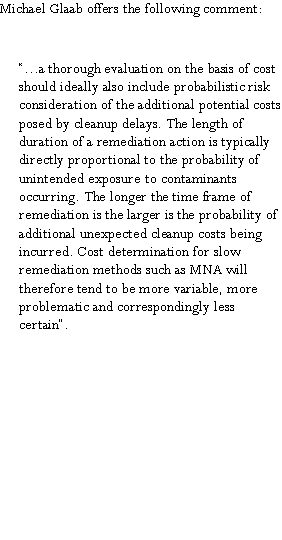
Text Box: Michael Glaab offers the following comment: 


“...a thorough evaluation on the basis of cost should ideally also include probabilistic risk consideration of the additional potential costs posed by cleanup delays. The length of duration of a remediation action is typically directly proportional to the probability of unintended exposure to contaminants occurring. The longer the time frame of remediation is the larger is the probability of additional unexpected cleanup costs being incurred. Cost determination for slow remediation methods such as MNA will therefore tend to be more variable, more problematic and correspondingly less certain”.       
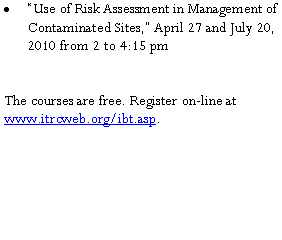
Text Box: Text Box: Text Box: “Use of Risk Assessment in Management of Contaminated Sites,” April 27 and July 20, 2010 from 2 to 4:15 pm
 

The courses are free. Register on-line at  www.itrcweb.org/ibt.asp.


Text Box: Training  (continued from p. 5)
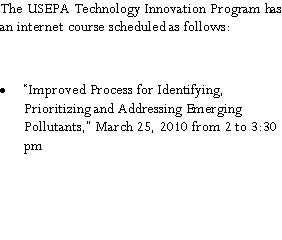
Text Box: The USEPA Technology Innovation Program has an internet course scheduled as follows:


“Improved Process for Identifying, Prioritizing and Addressing Emerging Pollutants,” March 25, 2010 from 2 to 3:30 pm

Internet courses may be archived at the respective websites for reference at the user’s convenience.


http://www.clu-in.org/training/

PAERAB Home Next Page Previous Page Text Box: Site 78  (continued from p. 8)
